5 Reasons You May Not Want to Install Artificial Turf Yourself
Artificial turf looks simple to install. What's underneath it is the part that matters. Here are five reasons a DIY turf install can cost more than it saves.
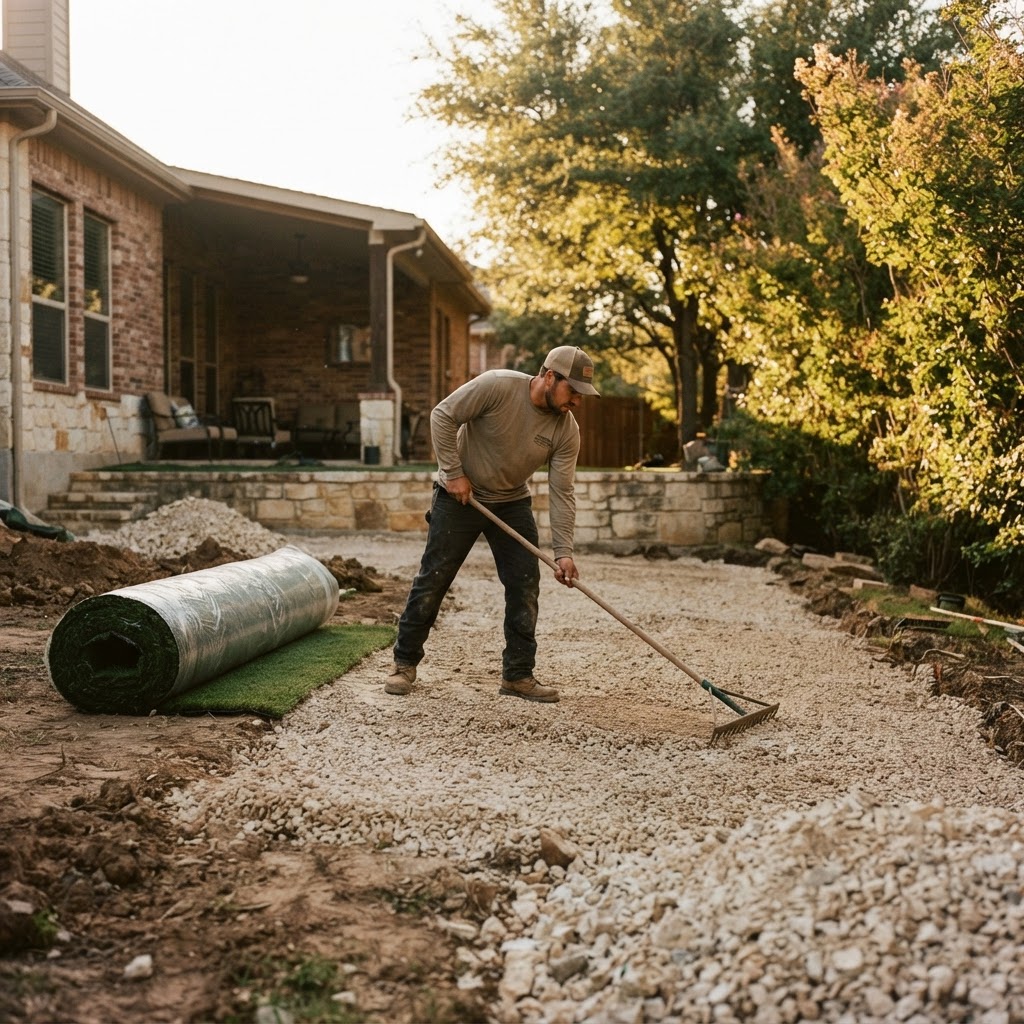
Artificial turf can look deceptively simple.
Remove the grass. Put down some base. Roll out the turf. Cut it. Secure it. Done, right?
Not exactly.
Can you install artificial turf yourself? Absolutely. But before you decide to make your backyard your first turf project, there are some things you should know.
The turf you see when the project is finished is only part of the installation. What happens underneath it, and how well that work is performed, will often determine how that turf looks, drains, feels, and performs years from now.
Here are five reasons you may want to think twice before making artificial turf your next DIY project.
1. Turf Installation Is a Grueling Amount of Work
If you've never installed turf before, it's easy to underestimate the physical demands of the project.
A proper installation can involve removing existing grass and soil, loading and hauling excavated material, bringing in tons of aggregate, spreading base material, grading, compacting, cutting turf, moving heavy rolls, joining seams, securing edges, and cleaning everything up when you're finished.
And you're not simply moving material. You are trying to maintain elevations and drainage while doing it.
A professional crew has the equipment, manpower, and experience to perform these steps efficiently. For a homeowner doing it for the first time, what looked like a weekend project can quickly turn into a much larger undertaking.
2. Drainage Isn't Something You Can Learn From a Diagram
You can watch videos, search the internet, and even ask AI how to build a turf system. Those resources can certainly help you understand the basics.
What they cannot do by themselves is give you field experience.
Every property is different.
Where does the water currently travel? Where are the high and low points? Where does the house sit in relation to the yard? Where are the downspouts? What type of native soil are you dealing with? Where can water safely discharge? How much fall exists across the area?
Those questions affect how much material should be removed, how much base material is required, and how the finished surface should be graded.
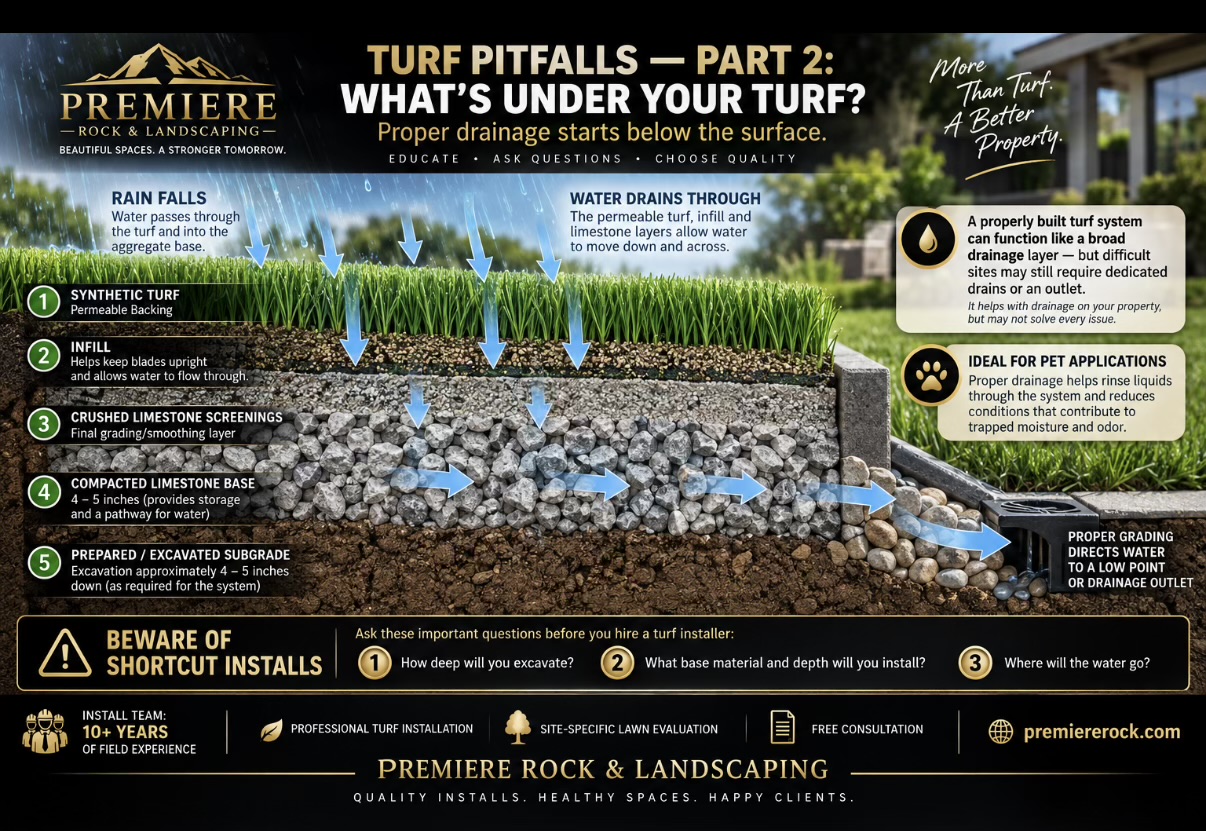
A properly constructed permeable turf system can essentially function as a large drainage field, allowing water to move through the turf and into the properly prepared aggregate system beneath it.
Build that system incorrectly, however, and instead of improving drainage, you can create low spots, standing water, soft areas, odors, erosion, or other problems underneath the turf.
Drainage isn't just about knowing what materials to buy. It's about knowing how to read the property.
3. One Inch of Excavation Isn't a Long-Term Turf Foundation
One of the biggest mistakes we see in turf installation is insufficient excavation.
If you're looking for a professional, long-term installation, you generally cannot scrape off an inch of soil, throw down a little material, and expect the system to perform like a professionally built turf foundation.
Depending on the existing conditions and application, a quality installation may require approximately 3 to 5 inches of excavation and base preparation.
Why?
Because you need room to build the system underneath the turf.
That can include removing organic material and unstable soil, installing the appropriate aggregate base, establishing the grade, compacting in stages, adding a finishing layer where appropriate, and creating a firm, smooth surface for the turf.
The beautiful green turf gets everyone's attention.
The foundation underneath it is what makes the installation work.
4. You'll Warranty Your Own Work, But Nobody Else Will
DIY projects always look a little different when something goes wrong six months later.
Maybe a seam begins separating.
Maybe an area settles.
Maybe water starts collecting where it shouldn't.
Maybe an edge starts lifting.
Maybe you discover that the base wasn't compacted properly.
When you install the turf yourself, you are also your own warranty department.
A reputable professional turf installer should stand behind the workmanship of the installation. Depending on the contractor, workmanship warranties may range from approximately one year to several years, separate from the manufacturer's warranty on the turf product itself.
That distinction matters.
A manufacturer's turf warranty doesn't necessarily cover a poorly prepared subgrade, failed seam, improper grading, or installation error.
With DIY, when something fails, you're responsible for diagnosing it, opening the installation back up, buying additional materials, and fixing it.
Sometimes paying for professional installation isn't simply paying for labor.
You're paying for accountability.
5. The Finish Work Is Harder Than It Looks
If you're comfortable with an installation that is simply "okay," DIY turf may be perfectly acceptable.
But achieving a clean, professional finish is another matter.
Seaming and joining two pieces of turf takes practice. So does cutting accurately against concrete, fences, foundations, trees, borders, and curved areas.
You also have to understand grain direction, seam placement, fastening patterns, edge restraint, commercial staples or spikes, adhesives and seam tape, infill, brushing, and finishing.
Small mistakes become surprisingly noticeable once the entire lawn is green.
A poor seam can draw your eye every time you walk outside. Incorrect cuts can create gaps. Improper fastening can allow movement. Poor base preparation can eventually reveal dips and imperfections across the finished surface.
And then there's the material calculation.
How much aggregate base do you need?
How much finishing material or screenings?
How much compaction will occur?
How much material will be lost during grading?
Those calculations become much easier after you've installed turf repeatedly. On your first project, you're learning while simultaneously spending money on permanent materials.
So, Can You Install Your Own Artificial Turf?
Absolutely.
If you're mechanically inclined, meticulous, comfortable operating equipment, experienced with grading and drainage, and genuinely enjoy challenging DIY projects, there's no reason you can't tackle a turf installation.
But if you're simply thinking about "taking a flyer" on your first turf project because the installation looks straightforward, this may not be the project to experiment with.
Artificial turf is unusual because many installation mistakes don't become obvious immediately.
You start living on the surface.
It rains.
The ground moves.
The seasons change.
The turf gets traffic.
And that's when you begin discovering whether the system underneath that beautiful green surface was built correctly.
At Premiere Rock & Landscaping, we believe homeowners should understand what they're paying for. Turf isn't simply a product that gets rolled across the ground. It's an entire system, from excavation and drainage to aggregate, compaction, grading, seams, fastening, and finishing.
The turf is what you see. The installation underneath it is what you're really buying.
We hope this installment of our Turf Education Series has been helpful.
If you're considering artificial turf and have questions about your property, or would like a professional consultation on your project, contact Premiere Rock & Landscaping.
Considering synthetic turf? Whether you're building a pet-friendly backyard, dealing with a difficult lawn, or simply trying to create a more usable outdoor space, we're happy to evaluate your property.
Premiere Rock & Landscaping provides complimentary consultations and property-specific recommendations. We'll explain what we see, what we recommend, and whether synthetic turf, or another landscaping solution, makes the most sense for your property.
Premiere Rock & Landscaping STONE • LANDSCAPE • DESIGN premiererock.com
Turf Education Series
- Part 1: Why the Cheapest Turf Quote May Cost You More
- Part 2: What's Under Your Turf? Why Proper Drainage Matters
- Part 3: 5 Reasons You May Not Want to Install Artificial Turf Yourself
Contact Premiere Rock & Landscaping to schedule your complimentary consultation.
What's Actually Underneath a Turf Lawn
Tap a layer to see what it does. Toggle between a properly built system and the shortcut install this article warns against.
Synthetic Turf
The visible surface. Permeable backing lets water pass through into the system below rather than pooling on top.
Thinking About Turf for Your Property?
Before you rent an excavator or order materials, let us take a look at your yard. We'll evaluate the drainage, explain what a proper installation actually requires, and give you an honest recommendation, even if that means turf isn't the right fit. Consultations are complimentary.
Schedule a Free ConsultationWritten By
Ed Harris
North Texas landscaping specialists helping homeowners build outdoor spaces that last.
Ready to build a lawn you're proud of?
Our team knows North Texas turf inside and out. Let's talk about your yard.
Get a Free Estimate