The Soft Giant: A Homeowner's Guide to St. Augustine Grass in North Texas
Thick, soft, and shade-tolerant, St. Augustine is the Southern classic that turns a yard into a carpet. Here's your complete seasonal care guide for North Texas.
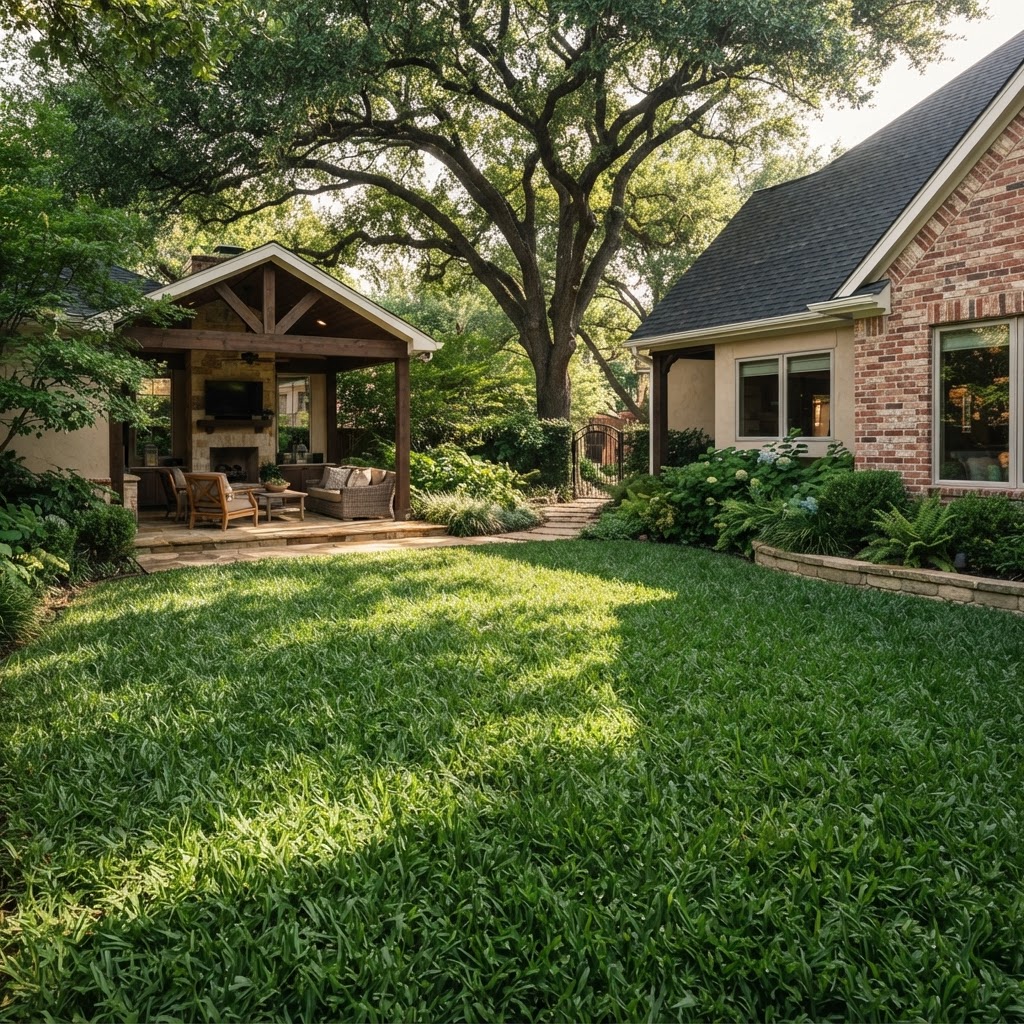
There's a reason St. Augustine is the grass of the Southern front porch, and it's the reason we recommend it so often. It's thick, it's soft, it spreads into a seamless carpet of green, and unlike Bermuda, it actually grows in shade. For your North Texas home with mature trees, two-story shadows, or that one stubborn corner where nothing else thrives, St. Augustine is often the only warm-season grass that will give you a real lawn - and we know exactly how to make it thrive.
It's also the most misunderstood. St. Augustine gets a reputation for being needy, and it's true that it asks for more water and more attention than Bermuda. But most of that reputation comes from treating it like Bermuda - mowing it short, watering it shallow, and ignoring the diseases that thrive in its dense canopy. We treat St. Augustine the way it wants to be treated, and it becomes one of the most rewarding lawns we can grow for you.
This is our complete guide to St. Augustine in the DFW climate, from planting timing to winter survival - and it's exactly how we'll care for yours.
What Makes St. Augustine the Soft Giant
St. Augustine spreads by above-ground stolons that creep across the soil, rooting as they go. The result is a dense, wide-bladed turf that feels plush underfoot and fills in gaps quickly once we get it established. Its signature trait is shade tolerance. Where Bermuda needs full sun and Zoysia wants at least a half day, your St. Augustine will hold its own in areas that get as little as four hours of direct sun - and we'll help you make the most of that.
The trade-offs are real, and we'll be honest about them. St. Augustine is the thirstiest of the three warm-season grasses, the most susceptible to fungal diseases, and the least cold-hardy. A hard North Texas winter can damage it where Bermuda and Zoysia sleep right through. Knowing that going in changes how we plant, water, and winterize for you - and we plan for all of it.
When We Plant St. Augustine in North Texas
The sweet spot: May through July.
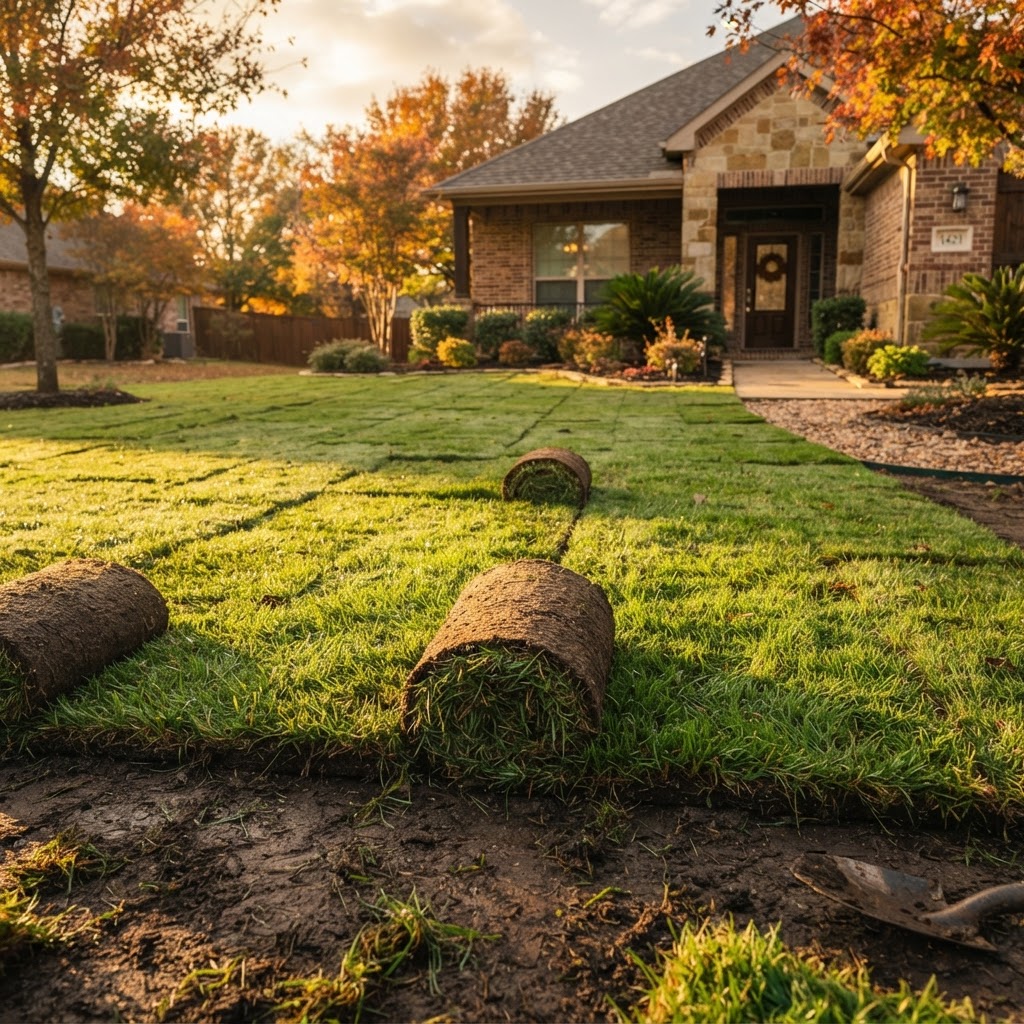
St. Augustine is almost always installed as sod, not seed, and it needs warm soil and warm nights to root. In North Texas, the planting window opens in May when soil temperatures are consistently in the 70s and runs through July. When we plant in this window, we're giving your sod the long, warm growing season it needs to knit together before winter.
May and early June are ideal. Planting early in the window gives us maximum time to establish your deep roots, which is critical because St. Augustine's cold-hardiness depends almost entirely on root depth going into winter. We want those roots deep before December.
We never plant St. Augustine after August. A late planting won't root before dormancy, and St. Augustine is the least forgiving of the three when it comes to a weak first winter. Sod laid in September or October is a bet we'd likely lose - so we won't take that bet with your money.
Your Year-Round St. Augustine Calendar
Here's what we do for your St. Augustine through every season:
| Season | What's Happening | What We Do | |---|---|---| | Spring (Mar-May) | Slow green-up, spreading begins | We remove debris with a light rake, wait until fully green to mow, apply pre-emergent once soil warms, and give you your first fertilizer after full green-up | | Summer (Jun-Aug) | Peak growth, peak water need | We mow every 7-10 days at 3-4 inches, deep-water 1-1.5 inches per week, and watch for chinch bugs and brown patch - this is peak disease season and we're on it | | Fall (Sep-Nov) | Slowing, storing energy, disease risk | We stop fertilizing 6 weeks before first frost, raise the mow height, apply fall pre-emergent, run our critical fungus-prevention window, and give you your last deep watering | | Winter (Dec-Feb) | Semi-dormant, vulnerable to cold | We stay off frozen grass, water only during dry warm spells to prevent desiccation, apply no fertilizer, and protect from winter fungus by keeping it dry |
Winter Prep: How We Protect Your Most Vulnerable Lawn
Of the three warm-season grasses, St. Augustine is the one that needs the most thoughtful winter prep, and we give it that attention. It's the least cold-hardy, the most prone to winter damage, and the slowest to recover if it takes a hit. Get this right and your lawn comes back strong. Get it wrong and you may be calling us to patch sod in the spring - so we get it right.
We stop fertilizing six weeks before the first expected frost. In North Texas, that means your last feed lands by mid-September. Late nitrogen pushes soft, water-rich growth that freezes and dies, and that dead tissue becomes the entry point for spring disease. This is the single most important fall decision for your St. Augustine, and we make it on time every time.
We apply fall pre-emergent in September. Winter weeds like annual bluegrass and chickweed love the thin spots in a St. Augustine lawn. Our September pre-emergent stops them before they germinate and compete with your grass in the spring.
We raise your mow height to 4 inches in October. Taller blades mean deeper roots and more energy storage. That extra height also helps your lawn dry out faster between fall rains, which directly fights the fungal diseases St. Augustine is prone to.
We water carefully going into winter. This is a balance we manage for you. We want your roots hydrated before dormancy so they survive freeze-thaw cycles, but we do not want a wet, cold lawn that breeds fungus. We water deeply once in late October if it's been dry, then back off. During winter, we only water during a dry, warm spell to prevent your roots from desiccating.
We manage the leaves relentlessly. Wet leaves matted on St. Augustine through winter are a guaranteed fungal problem. This grass cannot tolerate debris sitting on it. We blow or rake leaves weekly through the fall - no exceptions.
The Disease Factor: How We Stay Ahead of It
St. Augustine's density, the same thing that makes it feel like a carpet, also traps moisture at the soil surface. In North Texas humidity, that moisture breeds fungus. The two you'll see most are brown patch in the fall and gray leaf spot in the summer - and we're watching for both.
Our defense is cultural, not chemical. We water in the early morning so your blades dry by midday, never in the evening. We don't overwater. We mow at the right height so air moves through the canopy. And if we see a circular brown patch spreading in the fall, we treat it quickly before it eats a quarter of your lawn.
A healthy, well-aerated St. Augustine lawn fights off disease on its own. A stressed, overwatered, short-mowed one is a fungus buffet - and we keep yours out of that category.
Pro Tips From the Field
- We mow it tall. St. Augustine wants 3 to 4 inches, never shorter. Cutting it low scalps the crowns, thins the lawn, and invites weeds and disease - so we don't do it.
- We water deep and early. One to one-and-a-half inches once a week, applied before sunrise. We never water at night.
- We aerate every year or two. St. Augustine's dense canopy compacts the soil beneath it. Core aeration in late spring opens it up and dramatically reduces disease for you.
- We watch for chinch bugs in summer. If we see irregular patches of dead, sun-exposed grass in July or August, we check the soil line for these tiny pests. They can destroy a St. Augustine lawn fast if we ignore them - and we don't.
When to Bring Us In
St. Augustine is the grass that benefits most from a professional eye, because its problems - disease, chinch bugs, thinning in shade - are easier for us to prevent than to fix. If you're installing new sod, fighting a recurring disease, or watching your shaded areas thin out year after year, that's the moment to bring us in with a plan.
At Premiere Rock, we install and maintain St. Augustine lawns across North Texas and build seasonal programs around its specific needs, because a grass this soft deserves care that's just as deliberate. If you want a lawn that feels like the South should feel, we'll help you grow it right.
When We Do What for Your St. Augustine Lawn
Hover any bar to see the details. The colored windows show exactly when we schedule each service.
Hover any colored window above to see what we do and why the timing matters.
St. Augustine Year-Round Care Calendar
Hover or tap a month to see what your lawn needs. Bar height shows how active you should be.
Click a bar to lock in the details for that month.
Written By
Premiere Rock & Landscaping
North Texas landscaping specialists helping homeowners build outdoor spaces that last.
Ready to build a lawn you're proud of?
Our team knows North Texas turf inside and out. Let's talk about your yard.
Get a Free Estimate