The Luxury Lawn: A Complete Guide to Growing Zoysia in North Texas
Dense, lush, and drought-tolerant, Zoysia is the premium choice for North Texas homeowners who want a manicured look with less water. Here's your seasonal playbook.
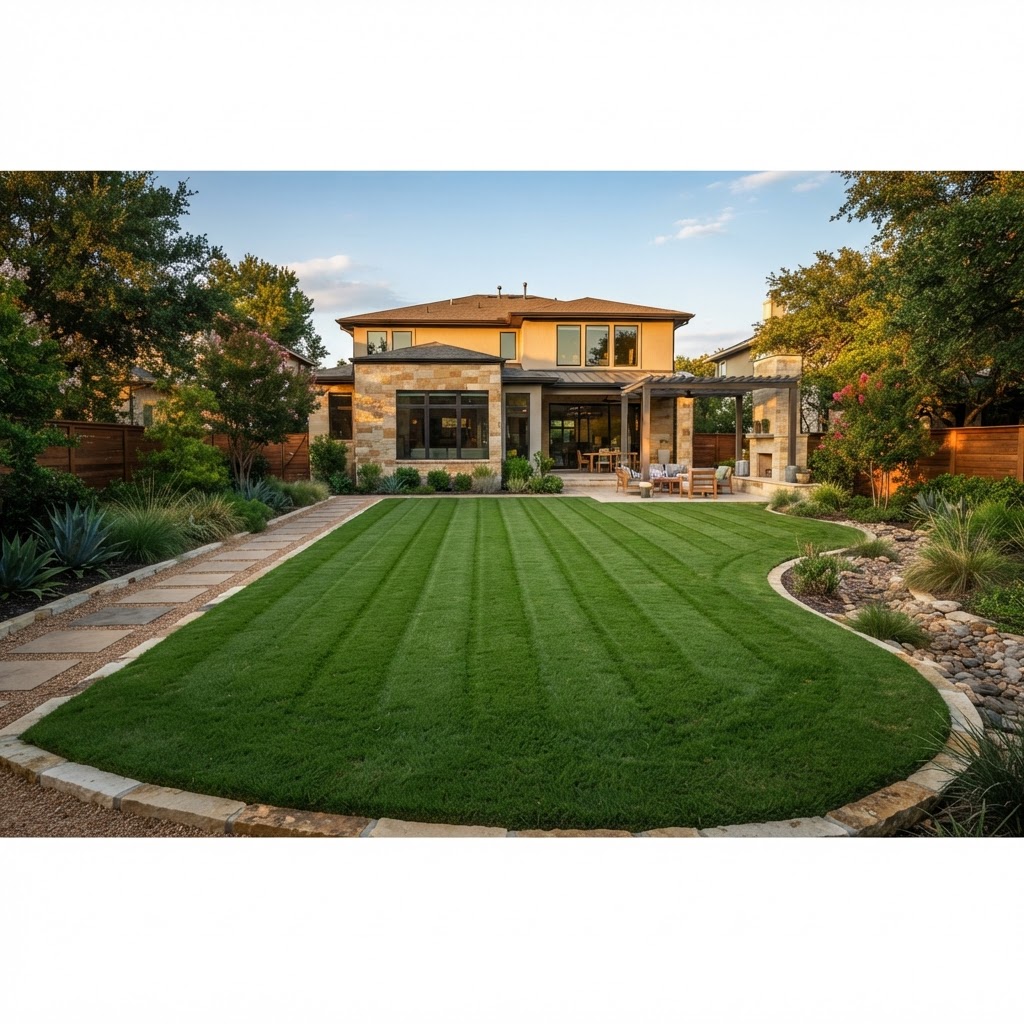
Walk barefoot across a healthy Zoysia lawn once and you'll understand why we love this grass. It's the kind of turf that feels like a carpet, looks like a golf course, and asks for less water than the alternatives. When you bring us in to install Zoysia, you're choosing a lawn that whispers cared for without screaming high maintenance - and that's exactly the kind of result we build for our North Texas homeowners.
Here's the honest part most guides skip: Zoysia rewards patience, and so do we. It's a slow grower by nature, which is what makes it so dense and weed-resistant, but it also means we have to time your planting, feeding, and winter prep with intention. Get the rhythm right and we'll give you one of the finest lawns on your block. Rush it and you'll spend a season wondering why nothing's happening - so we don't rush it.
This is our complete playbook for Zoysia in the DFW climate, from the first warm days of spring to the last cold snap before winter - and it's exactly how we'll care for yours.
What Makes Zoysia Different
Zoysia is a warm-season grass, which means it wakes up late, loves the heat, and goes dormant the moment things cool down. What sets it apart from Bermuda and St. Augustine is its density. The blades grow so tightly together that weeds struggle to find a foothold, and the root system runs deep enough to handle a Texas drought without panicking. When we install Zoysia for you, that density is what we're counting on to keep your lawn thick and clean with less chemical intervention.
The trade-off is speed. Zoysia spreads slowly, whether from sod or plugs. A lawn that takes Bermuda three weeks to fill in might take Zoysia a full season. That's not a flaw, it's the feature. Slow growth means we're out at your property less often to mow, fewer edges to trim, and a lawn that holds its shape between visits.
When We Plant Zoysia in North Texas
The sweet spot: late April through June.
Zoysia needs warm soil to root, and in North Texas that soil typically hits the right temperature (around 70 degrees) by mid-to-late April. When we install your Zoysia in this window, we're giving the grass the entire summer to establish roots before its first winter. That root establishment is everything - it's the difference between a lawn that thrives and one that struggles. A Zoysia lawn that goes into its first winter with shallow roots is a lawn that might not come back, so we won't risk it.
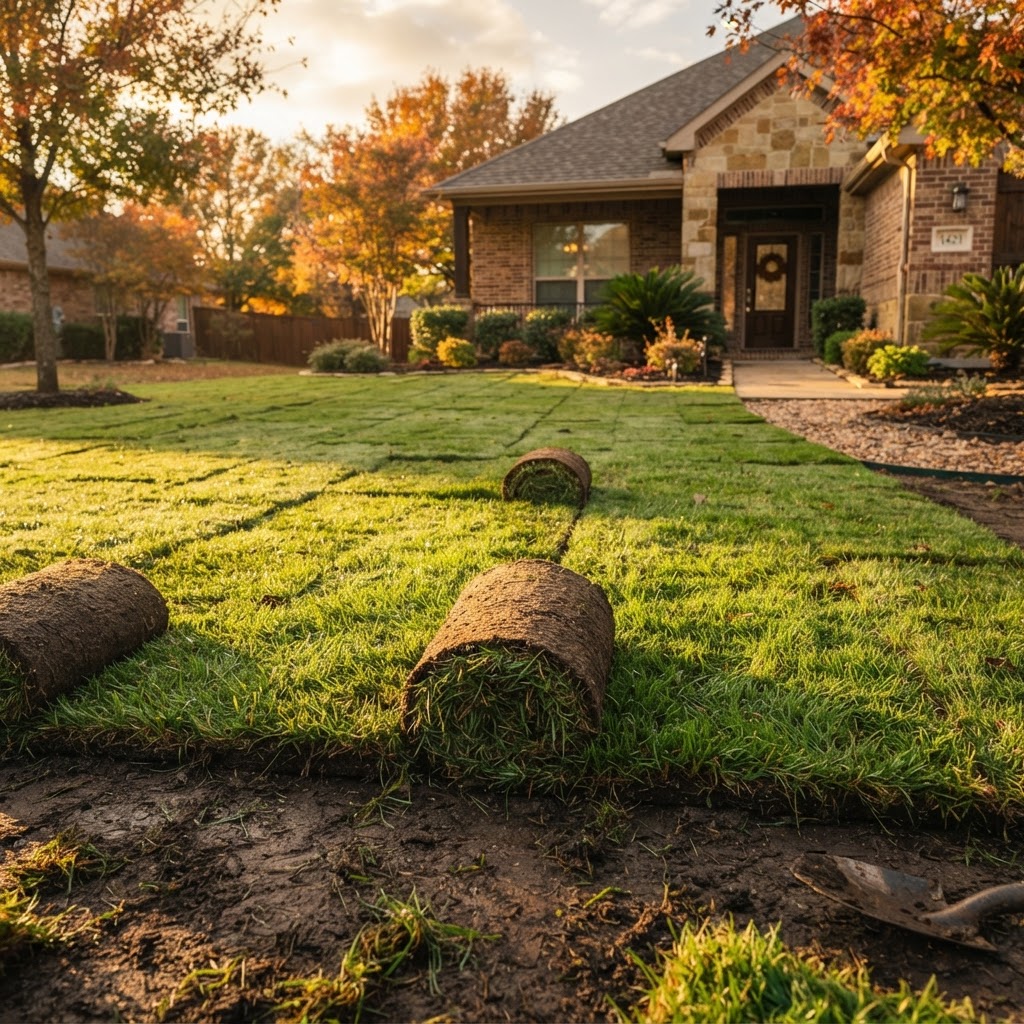
If we miss the spring window, we can push into early July, but we're racing the clock. We won't plant Zoysia any later than that because you'd be gambling with a winter that can arrive as early as November. Sod laid in August or September simply doesn't have time to root before dormancy - and we'd rather tell you to wait than take your money for a job that won't hold.
We avoid fall planting entirely. Unlike some cool-season grasses, Zoysia will not establish roots once soil temperatures drop. We won't sell you sod that's going to sit there all winter and either die or limp into spring.
Your Year-Round Zoysia Calendar
Here's what we do for your Zoysia through every season:
| Season | What's Happening | What We Do | |---|---|---| | Spring (Mar-May) | Waking up slowly from dormancy | We light-rake to remove debris, give you your first mow once the grass greens, apply pre-emergent to stop spring weeds, and hold off on fertilizer until it's fully green | | Summer (Jun-Aug) | Peak growth, peak beauty | We mow every 7-10 days at 1.5-2 inches, deep-water weekly (1 inch), and use this window to feed and fill any bare spots | | Fall (Sep-Nov) | Slowing down, storing energy | We stop fertilizing 6 weeks before first frost, raise the mow height slightly, apply your fall pre-emergent, and give you your last deep watering | | Winter (Dec-Feb) | Fully dormant, golden-brown | We stay off it when frozen, skip watering unless it's a dry winter, apply no fertilizer, and plan your spring projects |
Winter Prep: How We Tuck Your Lawn In
How we treat your Zoysia in the fall determines how it shows up in the spring. This is the part most homeowners skip, and it's the part that separates a good lawn from a great one - so we never skip it.
Six weeks before your first expected frost, we stop fertilizing. In North Texas, that typically means your last feed lands in late September to early October. Feeding too late pushes soft, tender growth that winter will kill, and that dead growth becomes the thatch and disease problems we'd be fighting next spring. We'd rather hold off.
We raise your mowing height by a half inch in October. Taller blades mean deeper roots and more leaf surface to capture late-season sun. That extra energy gets stored in the roots and is what fuels the green-up we deliver next spring.
We apply a fall pre-emergent in September. This is non-negotiable for us. The weeds you'd fight in March and April germinated the previous fall. Our September application stops winter weeds like henbit, chickweed, and annual bluegrass before they ever sprout. Your spring self will thank us.
We give your lawn one last deep watering before it goes dormant. A hydrated lawn survives winter better than a dry one, even when it's brown and looks asleep. If fall is dry, we soak it deeply once in late October or early November.
We keep the leaves off. A mat of wet leaves left on Zoysia all winter will smother it and invite disease. We blow or rake them regularly through the fall - it's part of the job.
Pro Tips From the Field
- We mow it shorter than you'd think. Zoysia looks best at 1.5 to 2 inches and actually tolerates low mowing better than most warm-season grasses. Cutting it too tall encourages thatch, so we keep it tight.
- We water deep, not often. One inch of water once a week beats a little every day. Deep watering drives roots down where they survive drought.
- We dethatch every couple of years. Zoysia's density is its superpower, but it also builds thatch. If your lawn feels spongy, we bring a dethatcher out in late spring.
- We don't fight the brown. Dormant Zoysia is not dead Zoysia. It's conserving energy. We resist the urge to water or feed a brown winter lawn - and we'll tell you the same.
When to Bring Us In
Zoysia is forgiving once it's established, but the establishment year is where most lawns go wrong. If you're starting fresh, dealing with bare spots that won't fill, or fighting a recurring weed or disease problem, that's the moment to bring us in. A single season of our guided care can save you three seasons of frustration.
At Premiere Rock, we install Zoysia sod and build maintenance programs around its specific rhythm, because a grass this good deserves a plan this intentional. If you're ready for a lawn that feels as good as it looks, we'd love to help you get there.
Our Timeline for Your Zoysia
Hover any bar to see the details. The colored windows show exactly when we schedule each service.
Hover any colored window above to see what we do and why the timing matters.
Zoysia Year-Round Care Calendar
Hover or tap a month to see what your lawn needs. Bar height shows how active you should be.
Click a bar to lock in the details for that month.
Written By
Premiere Rock & Landscaping
North Texas landscaping specialists helping homeowners build outdoor spaces that last.
Ready to build a lawn you're proud of?
Our team knows North Texas turf inside and out. Let's talk about your yard.
Get a Free Estimate