The Texas Survivor: Everything You Need to Know About Bermuda Grass
Bermuda thrives where other grasses burn. Built for full sun and triple-digit heat, it's the workhorse of North Texas lawns. Here's how to keep it championship-grade year-round.
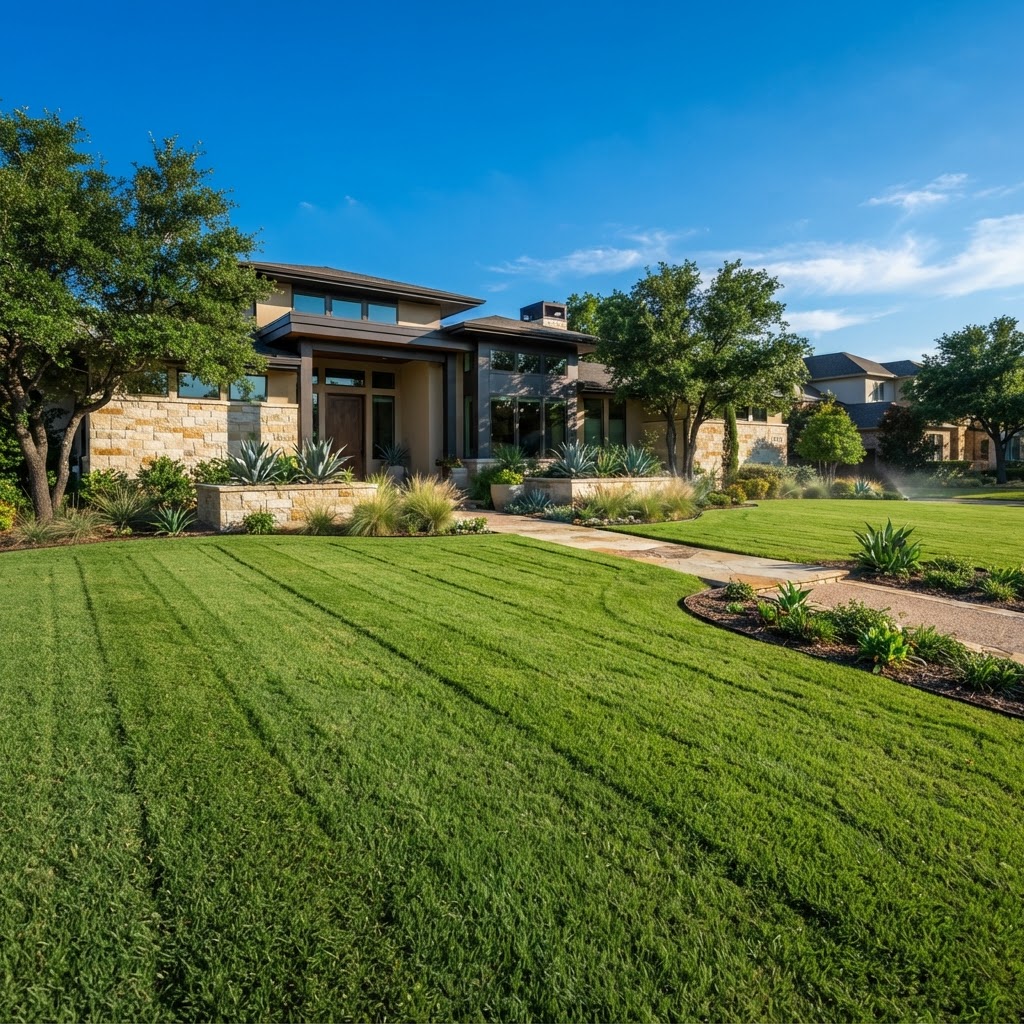
If Texas had an official grass, it would be Bermuda. This is the turf you'll find on every athletic field, golf course fairway, and sun-baked front yard across the DFW area, and there's a reason we reach for it again and again. Bermuda doesn't just tolerate the heat, it demands it. When the thermometer hits triple digits and every other lawn in your neighborhood is curling up and turning brown, your Bermuda will be out there photosynthesizing like it's a mild spring day - and we'll be the ones keeping it championship-grade.
It's aggressive, fast-growing, drought-resistant, and nearly indestructible once we get it established. For full-sun North Texas yards, it's hard to beat. But that same aggressiveness is what gets homeowners in trouble, and it's exactly why you want us managing it. Bermuda doesn't know when to stop, and if we don't manage its rhythm, it'll edge into your flower beds, thatch up your soil, and go dormant so hard in winter you'll swear it died. We know when to rein it in.
This is our complete guide to keeping your Bermuda looking like a ball field, from planting to winter prep and everything between.
What Makes Bermuda the Survivor
Bermuda spreads by both above-ground stolons and below-ground rhizomes, which is a fancy way of saying it has a dual-engine growth system. We cut it, and it heals. We drought it, and it goes dormant then bounces back. You walk on it, and it packs down denser. This is the grass that recovers from abuse faster than any other warm-season turf, and we use that resilience to your advantage.
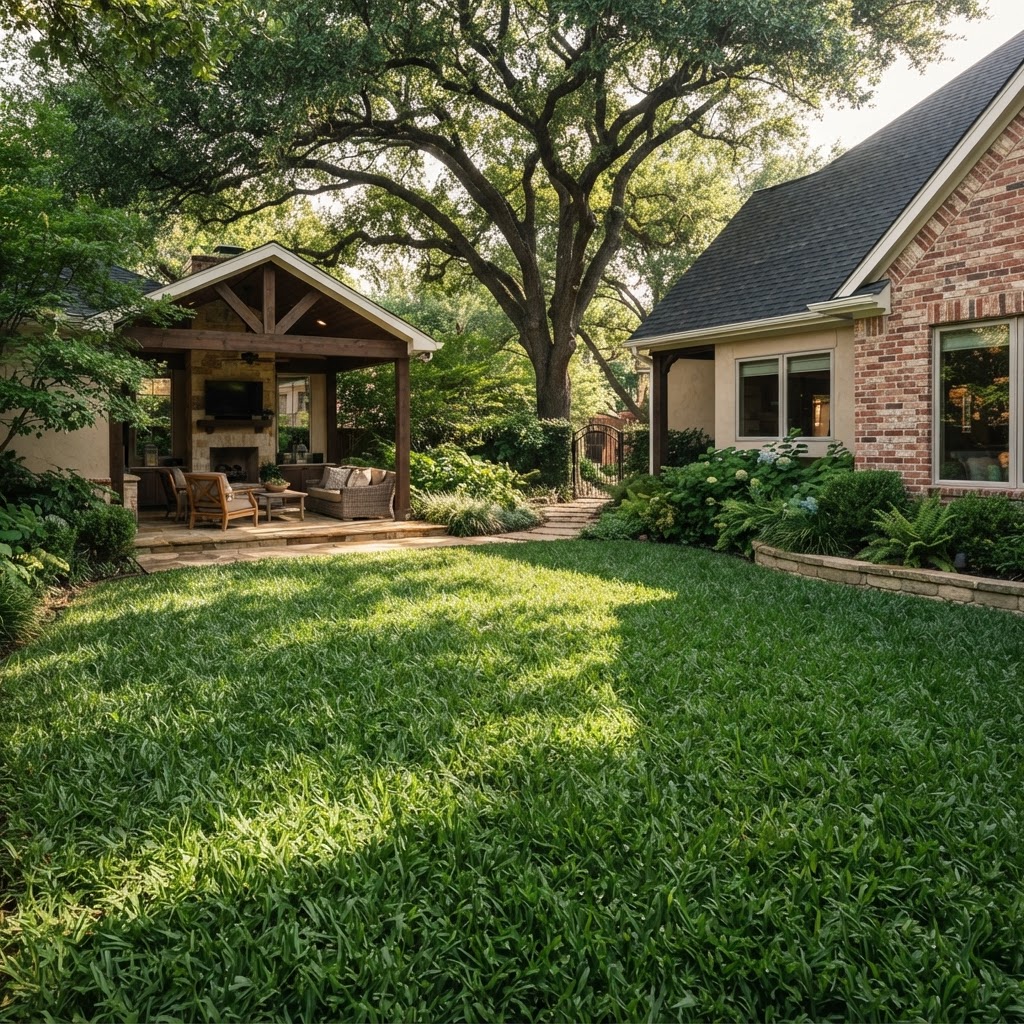
The catch is light. Bermuda needs full sun, meaning six or more hours of direct sunlight, and it really wants eight or more. If you have a yard with significant shade, we'll be straight with you: Bermuda is the wrong grass and you should let us talk to you about St. Augustine instead. We won't sell you a lawn that's set up to fail.
When We Plant Bermuda in North Texas
The sweet spot: mid-April through May.
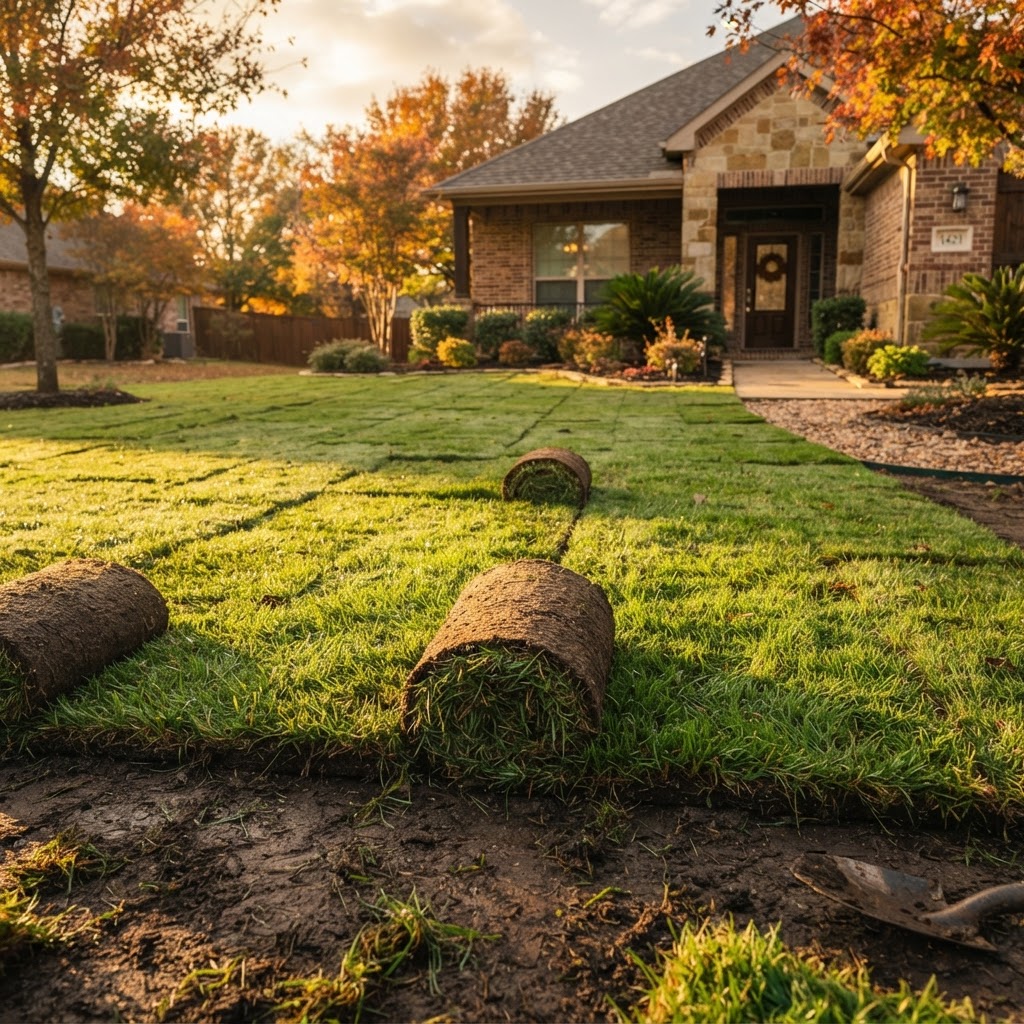
Bermuda needs soil temperatures consistently above 65 degrees to germinate from seed, and above 70 to root well from sod. In North Texas, that window opens in mid-to-late April and runs strong through May. When we plant in this window, we're giving your Bermuda the long, hot summer it craves to fully establish before winter.
If we're seeding rather than sodding, we can push into June since seed germinates fast in warm soil, but we'll keep it consistently moist during germination. Sod we lay in June or July will establish, but we'll be out more often to keep it watered and beat the heat.
We don't plant Bermuda after mid-July. A late planting won't have time to root before dormancy, and you'd lose your investment to the first hard freeze. Like all warm-season grasses, Bermuda does not establish roots in cold soil - and we won't pretend otherwise.
Your Year-Round Bermuda Calendar
Here's what we do for your Bermuda through every season:
| Season | What's Happening | What We Do | |---|---|---| | Spring (Mar-May) | Aggressive green-up and spread | We scalp the lawn in early March to remove dead growth, bag the clippings, apply pre-emergent, wait until fully green to fertilize, and mow low and often | | Summer (Jun-Aug) | Peak growth, peak heat tolerance | We mow every 4-7 days at 1-1.5 inches, deep-water weekly, and this is when we fill your bare spots and repair damage fast | | Fall (Sep-Nov) | Growth slowing, energy storage | We stop fertilizing 6 weeks before first frost, raise the mow height slightly, apply fall pre-emergent for winter weeds, and give you your last deep watering | | Winter (Dec-Feb) | Fully dormant, straw-colored | We stay off frozen grass, skip watering unless winter is bone dry, apply no fertilizer, and use dormancy to plan your edging and bed projects |
The Spring Scalp: Our Secret Weapon
Here's a move that separates serious Bermuda owners from everyone else, and it's one we never skip: the spring scalp. In early March, before your grass starts greening, we drop our mower to its lowest setting and cut the entire lawn down to the dirt. We bag every clipping.
What this does is remove all the dead, matted top growth from the previous season. That dead layer blocks sunlight from reaching the soil, slows your green-up, and harbors disease. Scalping lets the sun hit the soil directly, warms it faster, and triggers your Bermuda to wake up weeks earlier than it would on its own. You'll see green weeks before your neighbors who skipped this step - because we didn't skip it for you.
We do this once a year, early, and your Bermuda will out-compete everyone else's on the block.
Winter Prep: How We Set Up Your Strong Spring
Bermuda goes dormant hard. When the first hard freeze hits, it turns the color of straw and stays that way until April. That brown is not dead, it's sleeping, but how we treat it in the fall determines how fast and how strong it wakes up for you.
We stop fertilizing six weeks before your first expected frost. In North Texas, that means your last nitrogen feed lands by mid-September. Late feeding creates soft growth that winter kills, and that dead tissue becomes next year's thatch and disease problems - so we cut it off on time.
We apply fall pre-emergent in September. The weeds we battle in spring, particularly poa annua and henbit, germinate in the fall. Our September application stops them before they start. This single step eliminates more spring frustration than anything else we can do for you.
We raise your mow height in October. Going from 1 inch to 1.5 inches gives your plant more leaf surface to capture late-season sun and store energy in the roots. That stored energy is the rocket fuel for your spring green-up.
We give you one last deep watering before dormancy. If October is dry, we soak the lawn deeply once. A hydrated lawn survives winter's freeze-thaw cycles far better than a parched one.
We keep it clean. Leaves and debris left on dormant Bermuda trap moisture and breed disease. We blow them off through the fall and winter - part of keeping your lawn ready for spring.
Pro Tips From the Field
- We mow it low and often. Bermuda looks best cut short, between 1 and 1.5 inches. Cutting it tall makes it spongy and invites thatch. We mow frequently enough that we never remove more than a third of the blade at once.
- We water deep once a week. Bermuda's deep roots let it survive on less frequent, deeper watering than most grasses. An inch once a week is better than a little every day, and that's how we run it.
- We edge aggressively. Bermuda will invade your flower beds through its rhizomes. A clean edge trench, refreshed monthly in summer, is the only thing that holds the line - and we hold it for you.
- We don't water dormant grass. A brown winter Bermuda lawn needs almost nothing. Watering it won't green it up and can rot the crowns, so we leave it alone.
When to Bring Us In
Bermuda is the most DIY-friendly grass on this list, but the establishment year and the spring scalp are where most homeowners get it wrong. If you're starting from scratch, fighting persistent weeds, or dealing with thinning in shaded areas, that's the moment to call us in for a professional assessment. Sometimes the answer isn't more fertilizer, it's a different grass for that part of the yard - and we'll tell you that straight.
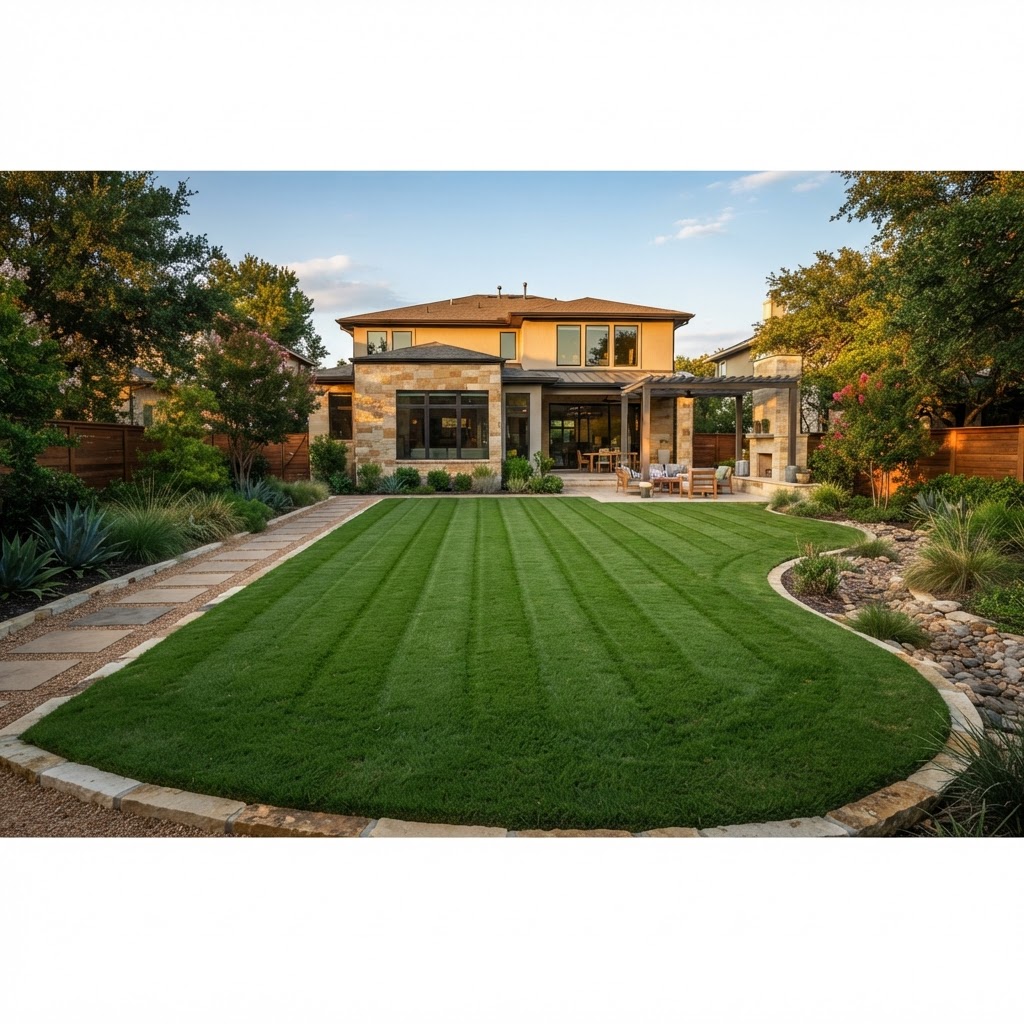
At Premiere Rock, we install and maintain Bermuda lawns across North Texas and build seasonal programs that work with its aggressive nature instead of against it. If you want a lawn that looks like a ball field, we know the playbook.
When We Do What for Your Bermuda Lawn
Hover any bar to see the details. The colored windows show exactly when we schedule each service.
Hover any colored window above to see what we do and why the timing matters.
Bermuda Year-Round Care Calendar
Hover or tap a month to see what your lawn needs. Bar height shows how active you should be.
Click a bar to lock in the details for that month.
Written By
Premiere Rock & Landscaping
North Texas landscaping specialists helping homeowners build outdoor spaces that last.
Ready to build a lawn you're proud of?
Our team knows North Texas turf inside and out. Let's talk about your yard.
Get a Free Estimate